
Vietnam Robusta Coffee Grades: Screen 16 vs 18 Buyer Guide
By Dang Duc Dung·Published
In this article
Vietnam Robusta coffee grades: What should international buyers know?
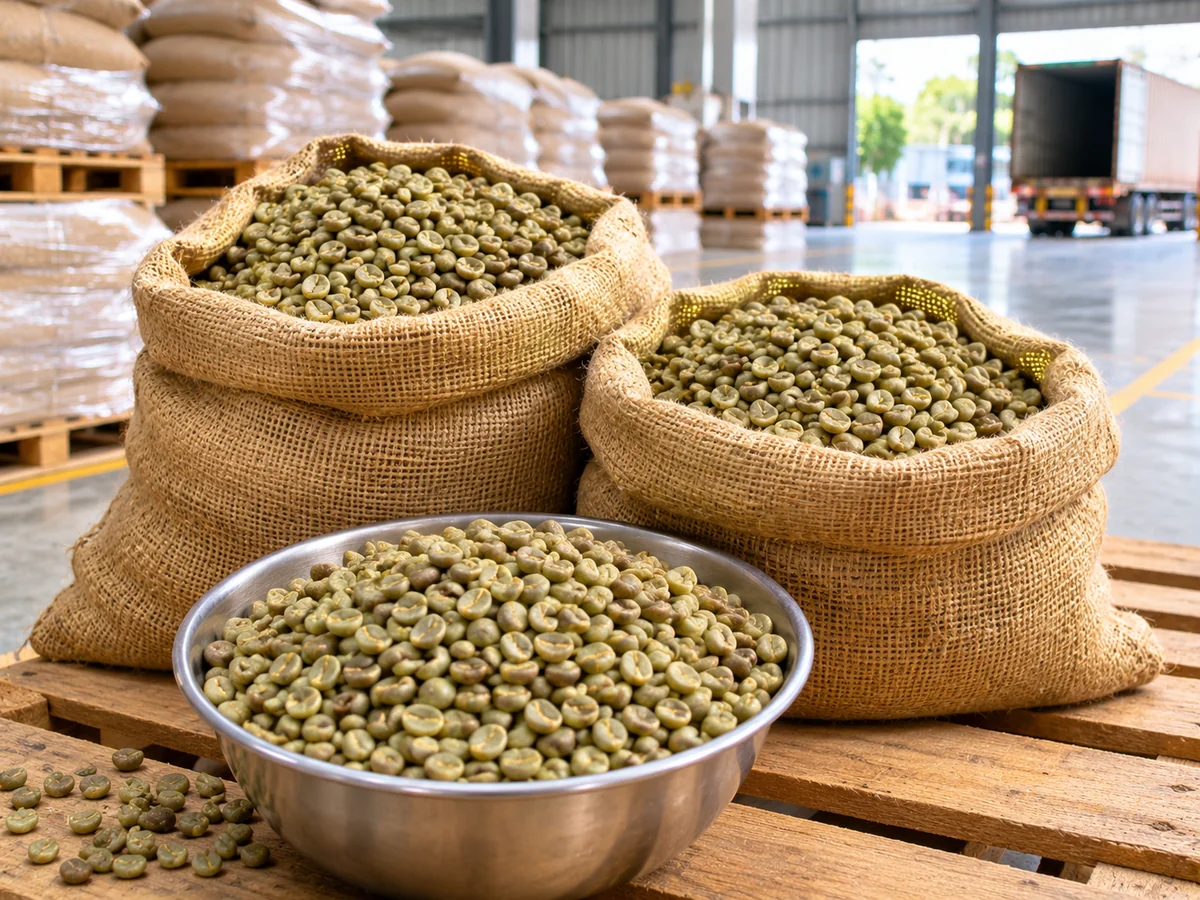
Vietnam Robusta coffee grades describe commercial characteristics that help buyers compare green coffee lots. Suppliers commonly identify coffee by grade and screen size, such as Grade 1 Screen 16 or Grade 1 Screen 18. However, screen size measures bean dimensions, whereas grade assessment may also involve defects, foreign matter and moisture. Importers should establish measurable specifications before accepting a supplier's offer.
Key quality parameters for green Robusta coffee
| Parameter | What it measures | Why it matters |
|---|---|---|
| Screen size | Bean dimensions using grading sieves | Supports size uniformity |
| Screen retention | Percentage remaining on a specified sieve | Confirms the agreed size distribution |
| Moisture | Water content in green coffee beans | Affects storage and shipment condition |
| Physical defects | Undesirable or damaged beans | Influences commercial quality |
| Foreign matter | Non-coffee material | Supports cleanliness requirements |
| Sensory assessment | Flavour and aroma characteristics | Helps determine roasting suitability |
| Traceability | Origin and identification of the lot | Connects samples and test records to goods |
A supplier's description should be supported by a specification sheet and representative sample.
Buyer takeaway: Compare coffee lots using the full specification, not simply a label such as Grade 1.
What is the difference between Robusta Screen 16 and Screen 18?
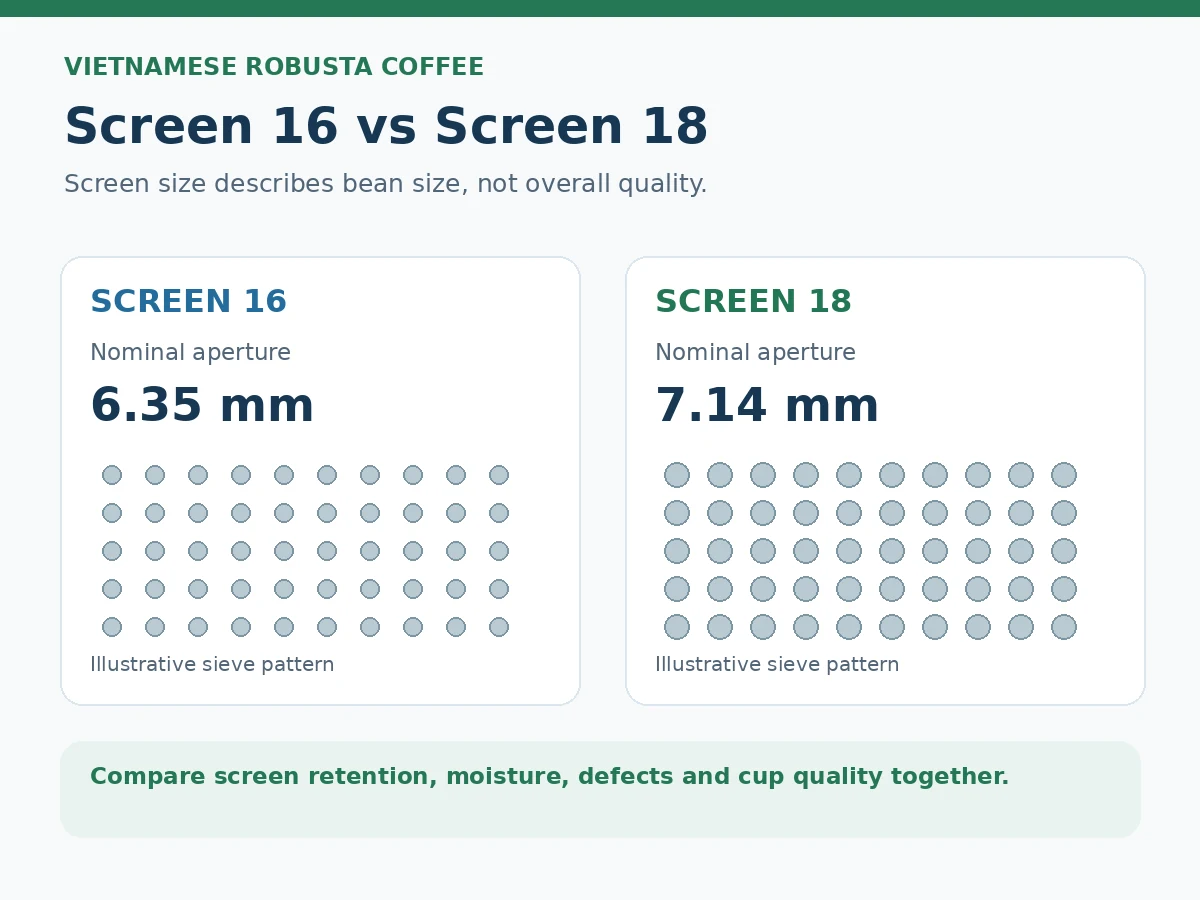
Screen 16 and Screen 18 refer to the nominal size of openings in coffee grading sieves. Screen 16 corresponds to approximately 6.35 mm, while Screen 18 corresponds to approximately 7.14 mm. A Screen 18 designation therefore refers to a larger bean-size category. However, the stated screen number alone does not confirm that a shipment meets the agreed retention percentage, defect limit or sensory requirements.
Screen 16 vs Screen 18 comparison
| Criteria | Screen 16 | Screen 18 |
|---|---|---|
| Nominal sieve aperture | 6.35 mm | 7.14 mm |
| Commercial description | Medium-to-large bean size | Larger bean-size selection |
| Typical purchasing focus | Consistent commercial specifications | Larger bean appearance and sorting |
| Required verification | Screen retention and tolerance | Screen retention and tolerance |
| Quality guarantee | No | No |
The dimensions are derived from screen numbers measured in sixty-fourths of an inch.
Does Screen 18 automatically mean better coffee?
No. Larger beans do not necessarily produce better flavour or guarantee a lower defect rate.
A Screen 18 lot with inadequate moisture control or poor storage may be less suitable than a well-processed Screen 16 lot.
For importers, the most appropriate choice depends on the intended roasting application, flavour requirements, commercial budget and contract specifications.
Some buyers prefer larger, more uniform beans. Others prioritize a particular cup profile, consistent processing or total procurement cost.
Buyer takeaway: Request actual screen-analysis results and agreed retention tolerances for the shipment.
What do Grade 1 and Grade 2 mean in Vietnamese Robusta coffee?
Grade 1 and Grade 2 are commercial grading designations that may reflect different allowances for defects and other physical characteristics. Their exact meaning depends on the applicable grading standard and the specification agreed between buyer and seller. Consequently, Grade 1 Screen 18 and Grade 1 Screen 16 should not be treated as identical products, nor should a Grade 1 label be accepted without documented limits.
How should buyers interpret a supplier's grade?
A useful product specification should state:
- Coffee species and product form.
- Commercial grade.
- Target screen and retention percentage.
- Maximum moisture content.
- Accepted black and broken bean limits.
- Foreign matter tolerance.
- Sampling and inspection method.
- Additional sensory or processing requirements.
Buyers should also ask whether the supplier is applying a Vietnamese national standard, an international reference or a customized contractual specification.
The grade must be sufficiently precise for the parties to determine whether the delivered product conforms to the agreement.
What moisture level is acceptable for green Robusta coffee?
Moisture content is an important quality and storage parameter for green coffee. The International Coffee Organization's Coffee Quality-Improvement Programme provides a reference range of 8% to 12.5% for exportable coffee, with moisture determined using an appropriate measurement method. This is a broad quality reference, not a guarantee that every coffee lot within that range is suitable for every buyer or shipment condition.
Why is excessive moisture a concern?
Moisture can affect the condition of coffee during storage and ocean transportation.
Inadequate moisture control may increase the risk of deterioration, particularly when combined with unsuitable packaging or storage conditions.
Importers should therefore confirm the moisture level at the time of inspection and agree on a reliable testing procedure.
Is 12.5% moisture always acceptable?
Not necessarily. A commercial contract may require a lower maximum moisture level depending on the product, processing method or customer specification.
Likewise, moisture content is not the only factor influencing storage safety. Packaging, ambient conditions, water activity and the condition of the shipment may also be relevant.
Buyer takeaway: Specify the maximum moisture limit and testing method in the contract rather than relying on a general industry reference.
How are defects measured in Vietnamese green coffee?
Green coffee defect assessment identifies and quantifies physical imperfections that may influence quality and commercial acceptance. Common categories include black beans, broken beans, insect-damaged beans and foreign matter. Different grading systems can use different sample sizes, classification methods and defect calculations. Buyers must therefore agree on the inspection framework before comparing results from different laboratories or suppliers.
Common physical defects
| Defect category | Description | Buyer concern |
|---|---|---|
| Black beans | Beans showing extensive dark discoloration | Product condition and sensory quality |
| Broken beans | Fractured bean material | Uniformity and processing suitability |
| Insect-damaged beans | Beans showing insect-related damage | Physical quality and contamination risk |
| Foreign matter | Stones, sticks or non-coffee material | Cleanliness and processing safety |
| Immature beans | Beans with characteristics associated with incomplete maturation | Consistency and flavour |
| Other discoloration | Beans with abnormal appearance | Requires further quality assessment |
Which international references are useful?
The International Organization for Standardization publishes ISO 10470:2004, a reference chart for defects in green coffee.
The Specialty Coffee Association's Coffee Value Assessment also provides a structured approach to assessing coffee's physical characteristics, including defects, moisture and size.
These references are useful for developing inspection procedures.
However, buyers should not mix defect results calculated under different grading methods without identifying the applicable sample size and conversion rules.
Why is physical grading not enough to guarantee coffee quality?
Physical grading provides important information about bean size, visible defects and other measurable properties, but it cannot fully describe a coffee's sensory characteristics. Two lots with similar screen retention and defect levels may taste different because of origin, harvesting, processing and storage conditions. For roasting businesses, representative samples and sensory evaluation are therefore necessary complements to laboratory and physical inspections.
What should buyers assess through samples?
A representative sample can help determine:
- Aroma and flavour characteristics.
- Body and bitterness.
- Undesirable sensory defects.
- Roasting behaviour.
- Suitability for blends or finished products.
- Consistency with the approved reference sample.
The sampling procedure should reflect the actual consignment.
When purchasing commercial Robusta in bulk, buyers should establish how the approved pre-shipment sample relates to the delivered lot.
Buyer takeaway: Evaluate physical specifications and sensory performance together.
What should buyers check before ordering Vietnamese Robusta coffee?
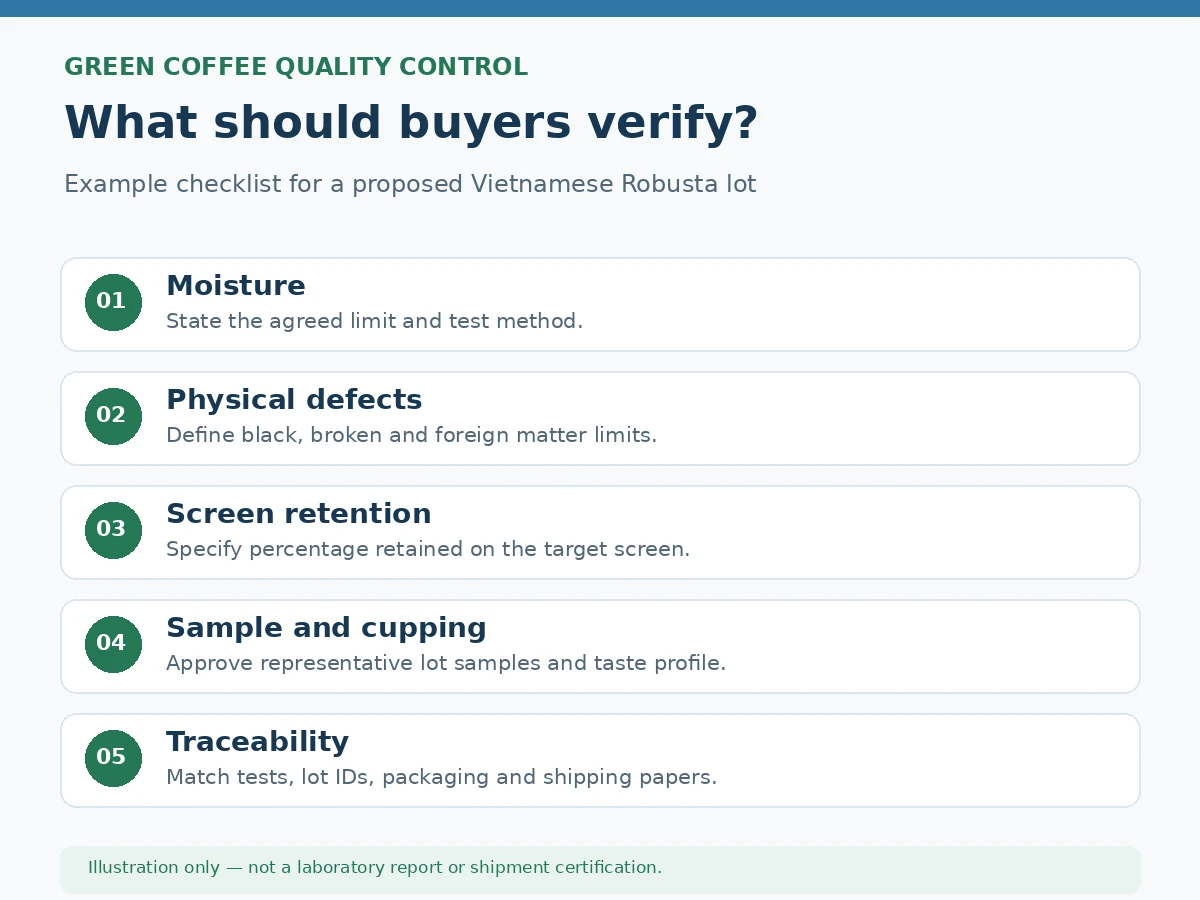
Before placing an order, international buyers should obtain a complete green coffee specification and confirm that the supplier can provide evidence for the proposed lot. Essential checks include screen retention, moisture, defects, foreign matter, processing method and traceability. Buyers should also agree on packaging, shipment timing and inspection responsibilities. A detailed request for quotation helps suppliers prepare comparable offers and reduces disputes after loading.
Vietnamese Robusta sourcing checklist
| Inspection area | Information to request |
|---|---|
| Coffee type | Green Robusta, with processing method |
| Grade | Contractual grade designation |
| Screen size | Screen 16, Screen 18 or another agreed size |
| Retention | Minimum percentage retained on the target screen |
| Moisture | Maximum content and testing method |
| Defects | Classification method and permitted limits |
| Foreign matter | Maximum tolerance |
| Sensory quality | Approved reference sample when relevant |
| Traceability | Origin, supplier and batch identifiers |
| Packaging | Bag type, net weight and liner requirements |
| Shipment | Quantity, Incoterm, port and readiness date |
| Documentation | Product specification, test reports and applicable certificates |
Why should inspection results be linked to the batch?
A quality report may describe only the sample submitted for analysis.
To determine whether it applies to the proposed shipment, buyers should confirm the sample identification, lot number, sampling date and testing procedure.
For larger transactions, an agreed independent inspection process may provide additional assurance.
A certificate for a different production lot should not automatically be treated as evidence of conformity for the goods being purchased.
How should buyers request a Robusta coffee quotation?
A professional green coffee request for quotation should include the exact technical specification, commercial quantity and delivery requirements. Without this information, different suppliers may quote unlike products, making price comparisons unreliable. Buyers should also clarify the inspection method, sample approval process and contractual responsibilities. The lowest advertised price is not necessarily the most economical offer if product quality or shipment conditions differ.
Example information for a Robusta RFQ
Product: Vietnamese green Robusta coffee.
Grade: Grade 1, subject to agreed specification.
Screen: Screen 16 or Screen 18, with specified retention.
Quality: Moisture, defects and foreign matter limits agreed in writing.
Quantity: State required metric tonnes.
Packaging: Specify bag material and net weight.
Delivery: Define destination, port and preferred Incoterm.
Documentation: Request relevant quality reports, commercial documents and traceability records.
Inspection: Agree on the sample approval and shipment inspection procedure.
This example is a framework rather than a confirmed supplier offer.
Where can international buyers find Vietnamese Robusta coffee suppliers?
International importers can explore Vexim Trade's Coffee, Tea & Beverages category to identify potential Vietnamese suppliers and submit sourcing enquiries. The directory provides product and company information, but buyers should verify whether specific green Robusta grades are available. Current stock, quality documentation and delivery conditions must be confirmed with the relevant supplier before a purchase commitment is made.
Explore the product category:
Coffee, Tea & Beverages — Vexim Trade
For information about company checks and supplier evidence:
How Vexim Trade Verifies Suppliers
Supplier verification and product inspection are different activities. A company profile does not replace batch-specific quality evidence.
Frequently asked questions about Vietnam Robusta coffee grades
International coffee buyers frequently ask whether larger screens mean better coffee, which moisture level is suitable and how physical defects should be assessed. These questions matter because grade labels alone do not establish the quality or suitability of a shipment. The following answers address common misunderstandings and provide practical guidance for importers preparing specifications and commercial quotations.
Is Screen 18 better than Screen 16?
Not automatically. Screen 18 indicates a larger nominal bean size, but larger beans do not guarantee superior cup quality, fewer defects or better storage conditions. Buyers should compare the complete specification and representative samples.
Does Grade 1 guarantee premium coffee quality?
No. Grade 1 is a commercial designation whose requirements depend on the adopted standard and agreed specification. Buyers should request the applicable grading criteria and actual inspection results.
Is 12.5% moisture the required maximum for all Robusta coffee?
No. The ICO uses 12.5% as an upper reference in its quality-improvement programme, but buyers and suppliers may agree on tighter moisture requirements. The correct acceptance limit should be established in the contract.
What is the difference between screen size and defect count?
Screen size describes bean dimensions, while defect assessment examines unwanted or damaged material according to a defined classification method. Both provide different information and should be specified independently.
Should buyers request samples before ordering?
Yes. Representative samples can support physical inspection, sensory evaluation and approval of the agreed product specification. The supplier and buyer should also establish how the approved sample will be matched to the shipment.
What documents should accompany green coffee exports?
Depending on the destination and contract, buyers may require an invoice, packing list, transport documents, product specifications, laboratory reports, certificates of origin and additional regulatory documentation. Requirements should be verified before shipment.
Conclusion: How should buyers select Vietnamese Robusta coffee?
Choosing Vietnamese Robusta coffee involves more than selecting Screen 16 or Screen 18. A reliable purchase depends on consistent physical grading, appropriate moisture control, acceptable defect levels, representative samples and transparent commercial conditions.
Importers should use measurable technical specifications when requesting quotations and approving suppliers.
Explore Vietnamese coffee suppliers on Vexim Trade to begin evaluating products for your next green coffee sourcing project.
Sources and references
- International Coffee Organization — Coffee Quality-Improvement Programme
- Specialty Coffee Association — Coffee Value Assessment
- ISO 10470:2004 — Green Coffee: Defect Reference Chart
- FAO — Green Coffee Classification and Grading
- Helena Coffee — Robusta Screen 18 vs Screen 16
- Vexim Trade — Coffee, Tea & Beverages
Editorial note: Screen sizes are nominal commercial measurements. Quality thresholds depend on the applicable standard and agreed contract. This article is an educational sourcing guide, not an inspection report or certification of a particular shipment.
Sourcing request
Have a product in mind? Send us your brief.
We match it to a Vietnamese producer that fits, and tell you plainly when none does. A written reply by the start of your next business day.
Request a quoteRelated news
November 17, 2026
Vietnam coffee prices November 2026: Robusta Buyer GuideOctober 17, 2026
Import Instant Noodles from Vietnam: Buyer's GuideNovember 17, 2026
Vietnam cinnamon and star anise exports 2026: Buyer Guide