
Global Shipping Costs Rise in October 2026
Global shipping costs are rising in October 2026, creating new challenges for international importers and exporters. Discover the latest container freight rate trends, U.S.–China maritime policy developments, and supply chain risks. Learn how businesses can manage shipping expenses, improve supplier reliability, and prepare smarter international sourcing strategies before November.
By Dang Duc Dung·Published
In this article
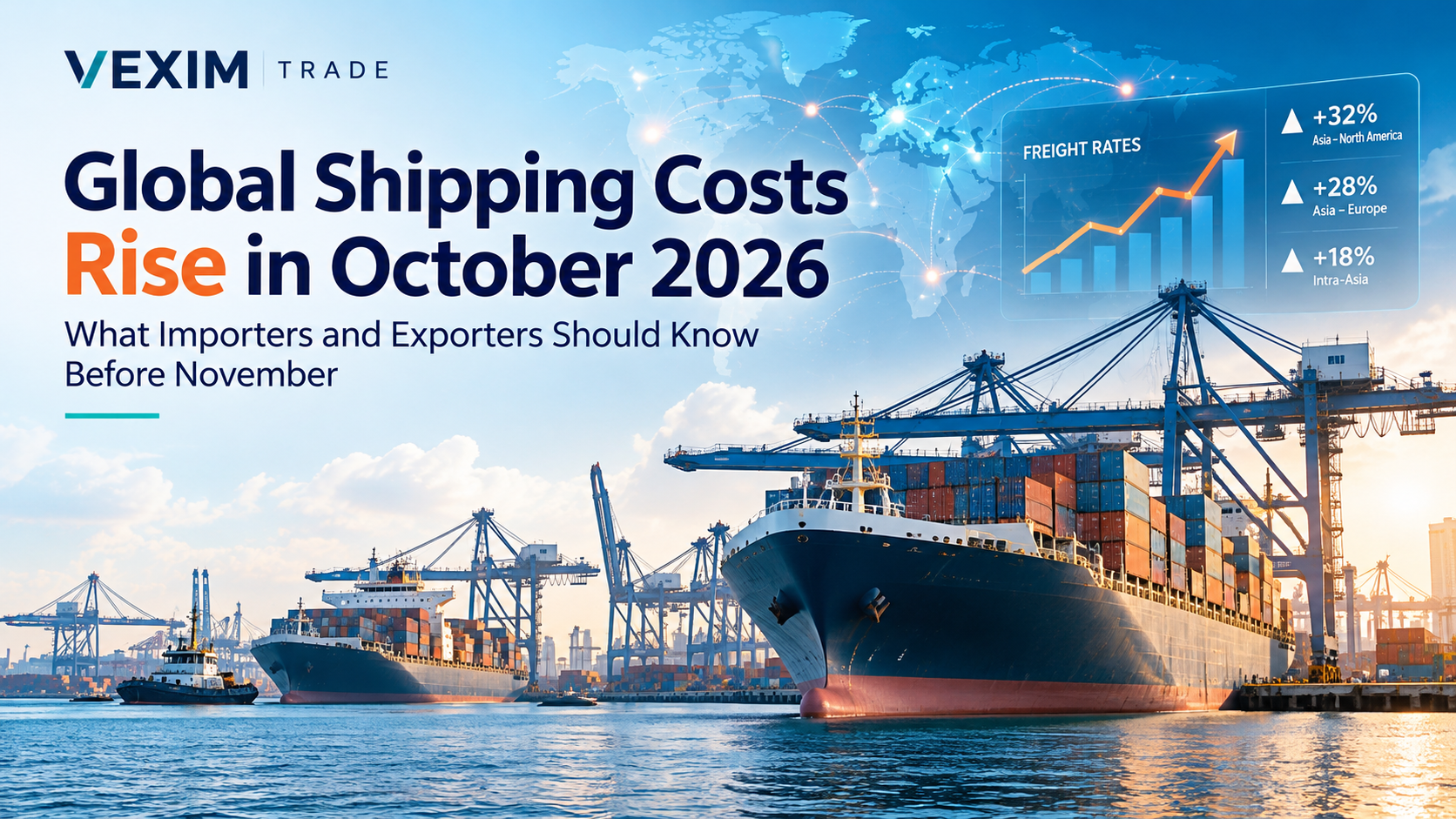
Global shipping costs are rising again as international trade enters the final quarter of 2026. Higher container freight rates, growing supply chain bottlenecks, and uncertainty surrounding U.S.–China maritime policies are creating new challenges for businesses involved in global sourcing.
According to shipping consultancy Drewry, its World Container Index increased by 2% to $4,585 per 40-foot container on October 22, 2026. Meanwhile, U.S. manufacturing surveys indicate that supplier delivery times are lengthening, even as demand remains strong.
For importers, exporters, and international buyers, these developments highlight a critical question: how can businesses maintain competitive sourcing costs and reliable deliveries in an increasingly unpredictable trade environment?
Why Are Global Shipping Costs Rising in October 2026?
Global shipping costs in October 2026 are being influenced by sustained import demand, shipping capacity adjustments, and geopolitical uncertainty. Container carriers are managing available vessel capacity while businesses continue to move goods ahead of year-end deadlines. Rising transportation expenses and disruptions along major trade routes are also making shipping budgets harder to predict.
Drewry's October 22 assessment revealed that its World Container Index had increased for a second consecutive week, reaching its highest level in 15 weeks.
Several factors are contributing to the current environment:
- Strong import demand: Continued U.S. purchasing activity is supporting freight rates on major transpacific routes.
- Shipping capacity adjustments: Carriers are cancelling selected sailings to manage vessel capacity and maintain freight rates.
- Maritime security concerns: Regional conflicts continue to affect vessel routing and transportation costs.
- Operational bottlenecks: Capacity constraints and shipping delays are placing additional pressure on international supply chains.
These developments suggest that freight rates are responding to more than consumer demand alone. Carrier capacity decisions and geopolitical risks are also playing important roles.
Source: Drewry World Container Index, October 22, 2026.
What Do the Latest Container Freight Rates Reveal?
The latest container freight data show that transportation costs are increasing across several major international shipping routes. As of October 22, 2026, Drewry reported higher rates on transpacific and Asia–Europe services. Although the increases varied by destination, the overall trend demonstrates why importers should review freight assumptions before confirming new international purchasing agreements.
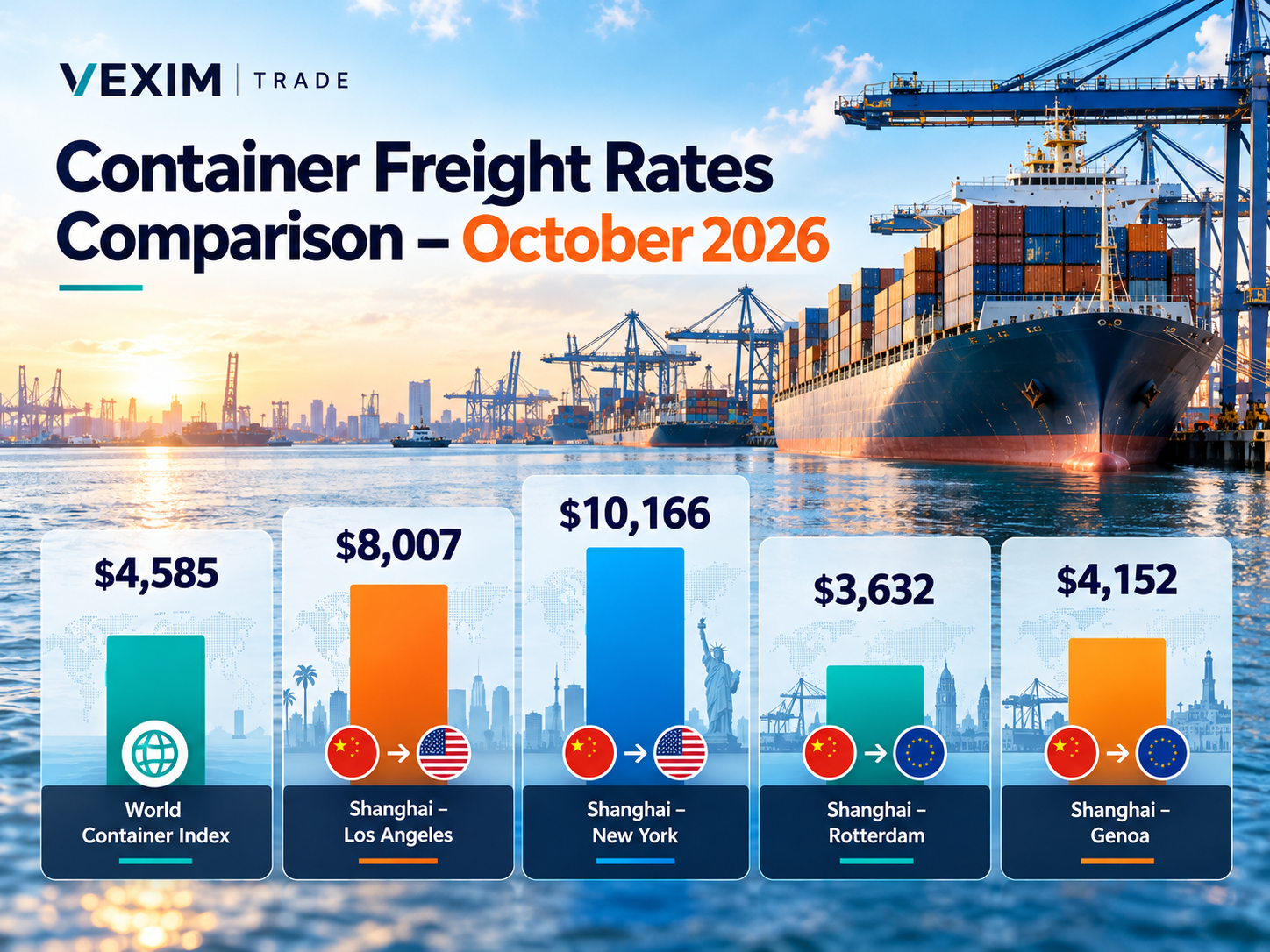
Container Freight Rate Comparison – October 22, 2026
| Shipping route | Rate per 40-foot container | Weekly change |
|---|---|---|
| Drewry World Container Index | $4,585 | +2% |
| Shanghai → Los Angeles | $8,007 | +2% |
| Shanghai → New York | $10,166 | +1% |
| Shanghai → Rotterdam | $3,632 | +3% |
| Shanghai → Genoa | $4,152 | +5% |
Source: Drewry Supply Chain Advisors, October 22, 2026.
The figures represent benchmark freight rates, not guaranteed quotations for individual shipments. Actual transportation costs depend on origin, destination, cargo characteristics, routing, available vessel space, and contract conditions.
For buyers sourcing from Vietnam or other Asian manufacturing markets, Shanghai-based benchmarks provide useful market context but should not be treated as direct quotations from Vietnamese ports.
Importers should request updated freight quotations for their specific routes and compare the total cost of delivery rather than relying exclusively on product prices.
Are Supply Chain Bottlenecks Becoming a Bigger Risk for International Buyers?
Supply chain bottlenecks are becoming a more significant concern for international buyers as manufacturers experience stronger demand and increasingly constrained delivery capacity. S&P Global's October 23 report showed that supplier delivery times in the United States had lengthened to their greatest extent since 2022. Businesses ordering internationally may therefore need to allow greater flexibility in purchasing and inventory schedules.
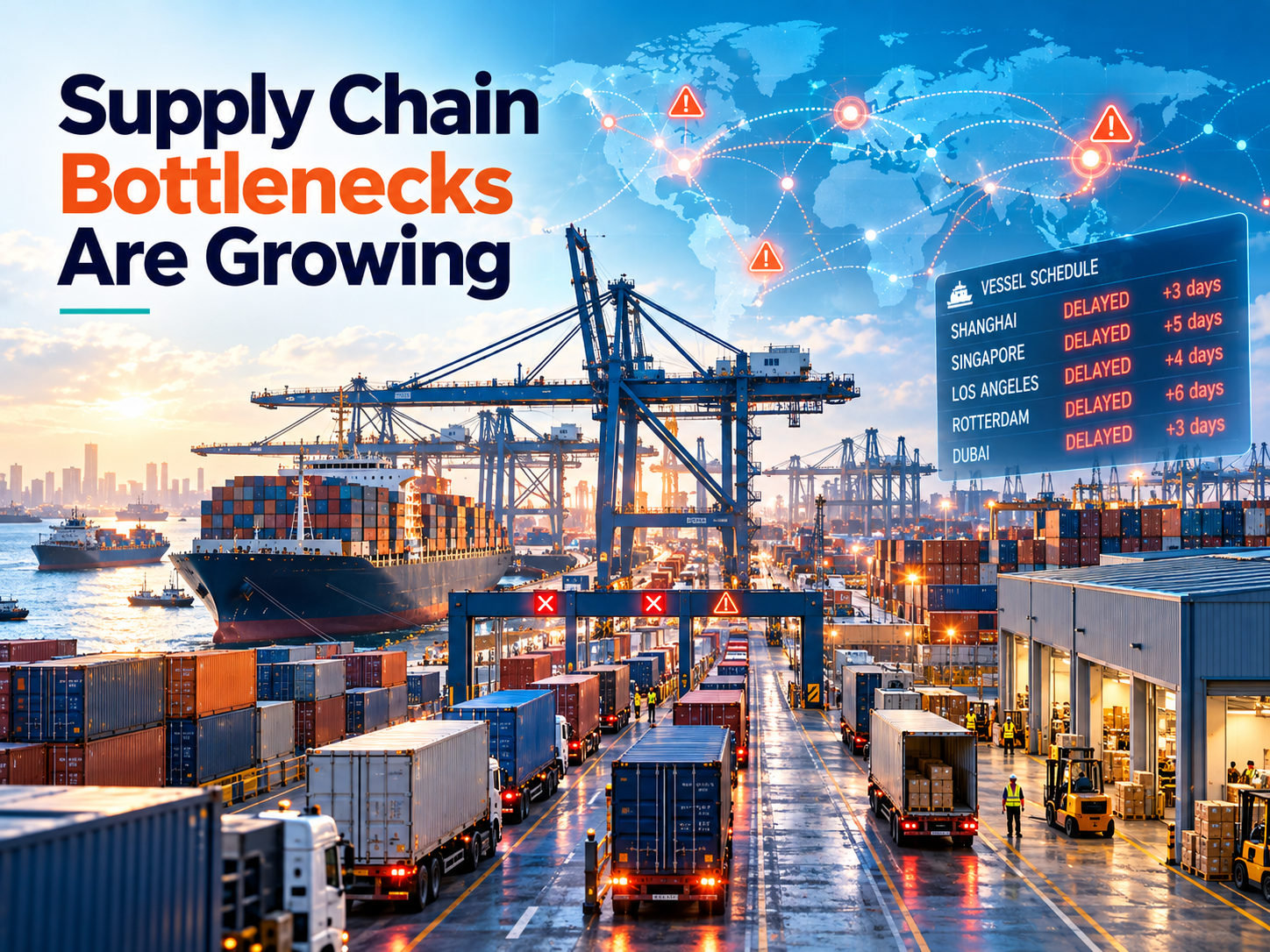
According to S&P Global, U.S. manufacturing activity remained in expansion territory during October, with its flash Manufacturing PMI reaching 56.0.
However, strong activity was accompanied by material shortages, growing order backlogs, and longer delivery times.
These conditions create several challenges for procurement teams.
Longer production lead times
Suppliers operating near capacity may require additional time to complete orders. Buyers should confirm realistic production schedules before finalizing shipping arrangements.
Greater inventory uncertainty
Delays at one stage of the supply chain can affect warehouse planning, distribution schedules, and downstream customers.
Pressure on landed costs
Higher transportation charges, supplier costs, and potential delays can increase the final cost of imported goods.
For international businesses, supplier reliability is becoming just as important as competitive pricing.
Source: S&P Global – U.S. Flash PMI, October 23, 2026.
How Could U.S.–China Maritime Policy Affect Shipping in November 2026?
U.S.–China maritime policy remains an important uncertainty for global shipping in November 2026. On October 26, the U.S. Trade Representative published a proposal to extend the suspension of certain Section 301 maritime measures through January 9, 2027. The proposal aims to allow further negotiations, but it has not yet been finalized as of October 27.
The existing suspension is scheduled to remain effective through November 9, 2026.
Under the proposed extension, specified maritime transport fees and related duties would remain suspended for an additional two months.
The U.S. government has invited public comments on the proposal, with an October 30, 2026 deadline for submissions to receive assured consideration.
| Important date | Development | Why it matters |
|---|---|---|
| October 26, 2026 | USTR proposal published | Signals possible continuation of the suspension |
| October 30, 2026 | Public comment deadline | Important regulatory milestone |
| November 9, 2026 | Current suspension expires | Final policy status needs monitoring |
| January 9, 2027 | Proposed extended expiration | Would provide additional time for negotiations |
The measures concern specified maritime services and related duties. They should not be confused with general import tariffs applied to goods from China, Vietnam, or other trading partners.
For international buyers, the key lesson is to monitor regulatory developments before assuming that current transportation policies will remain unchanged.
Source: U.S. Federal Register – Section 301 Maritime Action, October 26, 2026.
Is Global Import Demand Still Strong Despite Higher Shipping Costs?
Global trade remains active despite higher shipping costs and persistent policy uncertainty. Recent U.S. import data show that buyers continued bringing substantial volumes of goods into the country during September 2026. However, strong shipping volumes do not automatically indicate stronger final consumer demand, because companies may also import early to manage tariffs, inventory requirements, or anticipated disruptions.
According to Descartes Systems Group, U.S. containerized imports reached approximately 2.55 million twenty-foot equivalent units (TEUs) in September 2026.
This represented:
- A 10.3% increase compared with September 2025.
- The highest September import volume on record.
- A 2.2% decline compared with August 2026.
The data indicate that U.S. import activity remained resilient, although month-to-month volumes fluctuated.
For exporters and overseas suppliers, resilient purchasing activity suggests that international business opportunities remain available.
Nevertheless, businesses should distinguish between actual customer demand and precautionary inventory building when assessing future orders.
Source: Descartes Global Shipping Report – September 2026 U.S. Container Imports.
What Should Importers and Exporters Do Before November 2026?
Importers and exporters should reassess transportation costs, supplier capacity, and regulatory exposure before confirming new November shipments. Rather than reacting to every market fluctuation, businesses can strengthen procurement planning by comparing multiple quotations, verifying production schedules, and preparing alternative logistics arrangements. These steps can help reduce uncertainty without requiring companies to change their sourcing strategies unnecessarily.
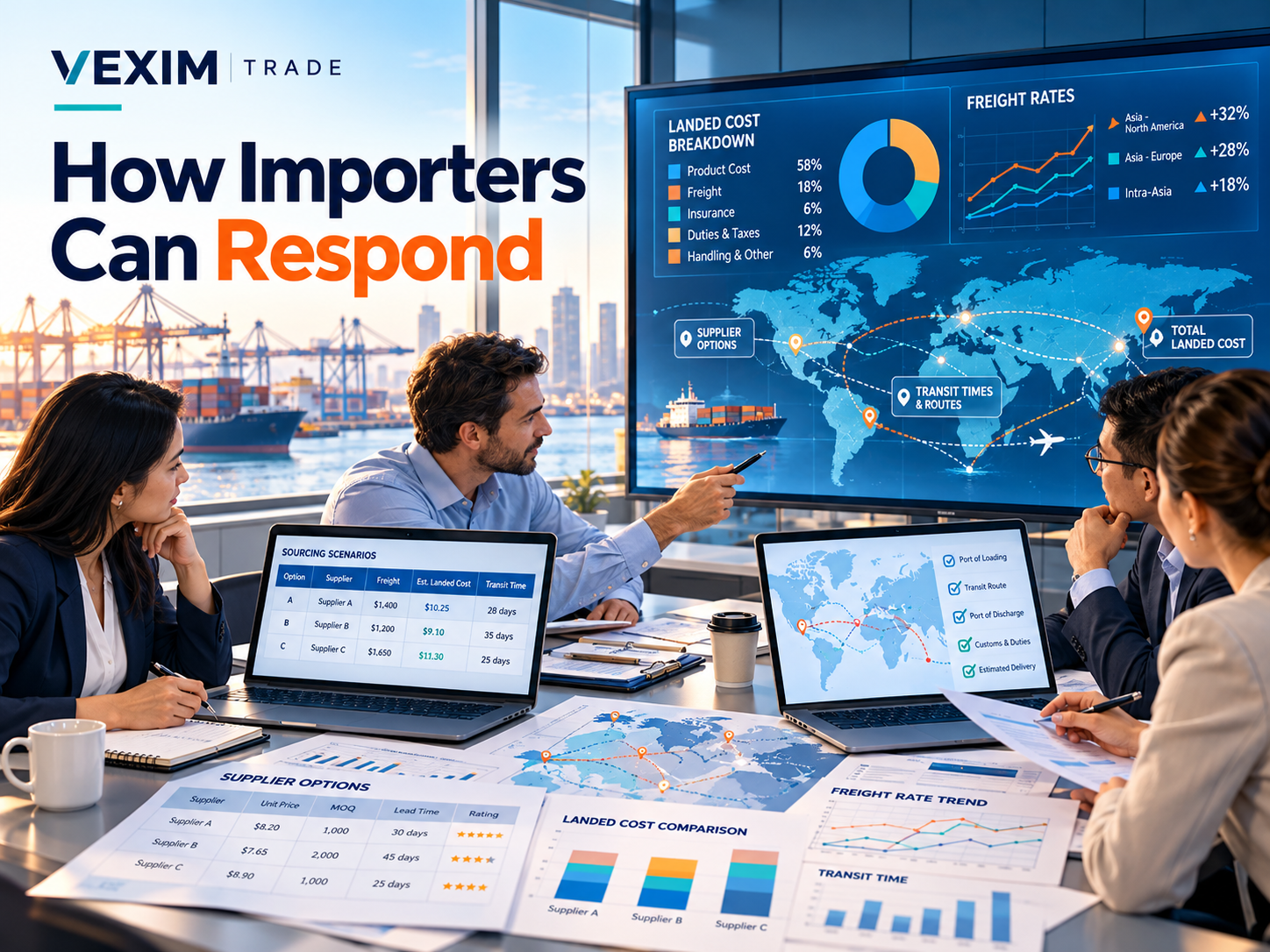
1. Review Total Landed Costs Before Confirming Orders
Importers should calculate the full cost of bringing goods to their destination rather than comparing supplier prices alone. Freight charges, insurance, customs duties, destination handling fees, and inland transportation can significantly affect purchasing decisions. Updated landed-cost calculations help businesses understand whether a seemingly attractive supplier quotation remains competitive after international delivery expenses are included.
For example, a procurement team comparing two suppliers should evaluate both quotations under consistent delivery terms and cost assumptions.
A lower factory price does not always translate into a lower final import cost.
2. Reconfirm Supplier Capacity and Delivery Schedules
With manufacturing backlogs increasing in some markets, buyers should confirm production availability before committing to delivery dates. Important checks include current factory capacity, raw-material availability, minimum order quantities, and estimated production lead times. Suppliers should also clarify whether quoted schedules include quality inspection, export documentation, and transportation to the departure port.
Buyers can reduce uncertainty by requesting documented production schedules and establishing milestones for order confirmation, inspection, and shipment.
Early communication can help prevent costly last-minute changes.
3. Prepare Alternative Sourcing and Shipping Options
Businesses should avoid depending entirely on one supplier or transportation route when practical alternatives are available. Maintaining qualified backup suppliers and comparing different logistics arrangements can improve operational flexibility. However, diversification should be based on verified production capabilities, product specifications, customs requirements, and total delivered costs rather than geographic location alone.
Alternative sourcing does not eliminate market risk, but it can help businesses respond when their primary suppliers face disruptions.
For buyers planning long-term international procurement, resilience should become a measurable part of supplier evaluation.
Why Does Supplier Verification Matter in a Changing Global Trade Market?
Supplier verification is increasingly important as businesses seek reliable sourcing options across multiple markets. A competitive quotation provides only part of the information required for a successful transaction. Importers also need confidence in supplier legitimacy, production capacity, document accuracy, and delivery history before entering purchasing agreements with unfamiliar overseas companies.

Key verification considerations include legal registration, factory capabilities, quality documentation, shipment records, and previous export experience.
This is particularly relevant when businesses explore new sourcing markets to reduce supply chain concentration.
Vietnam offers international buyers access to a range of manufacturers, agricultural producers, and trading companies. However, suppliers must still be evaluated individually, and sourcing from Vietnam does not automatically change the customs origin or tariff treatment of goods.
Through VEXIM Trade's supplier verification process, buyers can learn how the platform independently reviews company documents, factory evidence, and delivery history.
These checks support more informed purchasing decisions but do not replace buyer due diligence, independent product inspections, or applicable legal requirements.
What Opportunities Could Vietnam Offer International Buyers in Late 2026?
Vietnam remains a potential sourcing destination for international buyers seeking to expand supplier networks and improve procurement flexibility. As global freight expenses and trade policies continue to change, buyers may benefit from comparing Vietnamese suppliers with existing sourcing partners. The commercial opportunity depends on product requirements, available capacity, regulatory compliance, and total delivered costs.
For buyers considering Vietnam, the most useful approach is to assess individual suppliers against measurable business requirements.
These may include technical specifications, export experience, minimum order quantities, quality-control systems, and shipment readiness.
Businesses should also confirm the applicable rules of origin and destination-market requirements before assuming any potential tariff advantage.
VEXIM Trade connects international buyers with Vietnamese suppliers and provides sourcing support to help businesses evaluate available options.
For Vietnamese manufacturers interested in reaching overseas customers, the platform also provides information about supplier registration and verification.
Frequently Asked Questions (FAQ)
International buyers evaluating global shipping conditions in October 2026 are mainly concerned about freight costs, delivery reliability, trade policy changes, and supplier selection. The following answers address practical questions that procurement teams may face when preparing shipments for November and the final months of 2026.
1. Are global shipping costs increasing in October 2026?
Yes. Drewry reported that its World Container Index increased 2% to $4,585 per 40-foot container on October 22, 2026. However, rates vary by shipping route and service.
2. Will container freight rates continue rising in November 2026?
Further increases are possible, particularly on routes affected by capacity restrictions or security disruptions. The direction is not guaranteed, so buyers should monitor updated rate quotations and carrier schedules.
3. How can importers reduce international sourcing risks?
Importers can verify suppliers, compare total landed costs, confirm delivery schedules, and maintain qualified alternative sourcing options. Clear contract terms and shipment documentation are also important.
4. Does the proposed U.S.–China maritime policy extension remove import tariffs?
No. The October 26 proposal concerns the continued suspension of specified maritime measures. It does not eliminate general U.S. import tariffs or automatically change the tariff treatment of goods from other countries.
5. Can international buyers find suppliers through VEXIM Trade?
Yes. Buyers can explore Vietnamese supplier options, review available sourcing information, and submit product requirements through VEXIM Trade. Supplier suitability remains dependent on the buyer's specifications and verification results.
Outlook: What Should Global Traders Watch Next?
Global shipping costs in October 2026 highlight the continuing relationship between international demand, transportation capacity, and trade policy uncertainty. The coming weeks will be important for companies preparing their year-end purchasing plans. Buyers should closely monitor container freight rates, supplier delivery performance, and the final outcome of U.S. maritime policy discussions.
Although international trade remains active, successful sourcing decisions increasingly require accurate market information, reliable suppliers, and flexible procurement strategies.
Businesses that combine cost analysis with stronger supplier verification may be better positioned to navigate future disruptions.
Source Smarter With VEXIM Trade
Changing freight costs and global trade policies make reliable sourcing relationships more valuable than ever.
VEXIM Trade helps international buyers connect with Vietnamese suppliers and evaluate sourcing options based on their specific purchasing requirements.
Whether your business is expanding its supplier network, comparing sourcing alternatives, or exploring new import opportunities, VEXIM Trade provides a starting point for informed procurement decisions.
Explore Vietnamese suppliers or submit your sourcing requirements today.
Visit VEXIM Trade | Request a Sourcing Quotation
References
- Drewry – World Container Index, October 22, 2026
- S&P Global – U.S. Flash PMI, October 23, 2026
- U.S. Federal Register – Section 301 Maritime Action, October 26, 2026
- Descartes – September 2026 Global Shipping Report
Editorial cutoff: October 27, 2026. Market figures and policy statuses reflect information available at publication and may change.
Sourcing request
Have a product in mind? Send us your brief.
We match it to a Vietnamese producer that fits, and tell you plainly when none does. A written reply by the start of your next business day.
Request a quote