
Vietnam Digital Trade Promotion 2026: Why Supplier Data Matters for B2B Sourcing
Vietnam Digital Trade Promotion 2026 is moving toward connected platforms supported by accurate supplier data. Following a November 5 update from Vietnam's Ministry of Industry and Trade, this article examines how digital tools complement trade fairs, why transparent product and company records matter, and how international buyers can explore Vietnamese suppliers, compare offers, review verification evidence, and submit RFQs through VEXIM Trade.
By Dang Duc Dung·Published
In this article
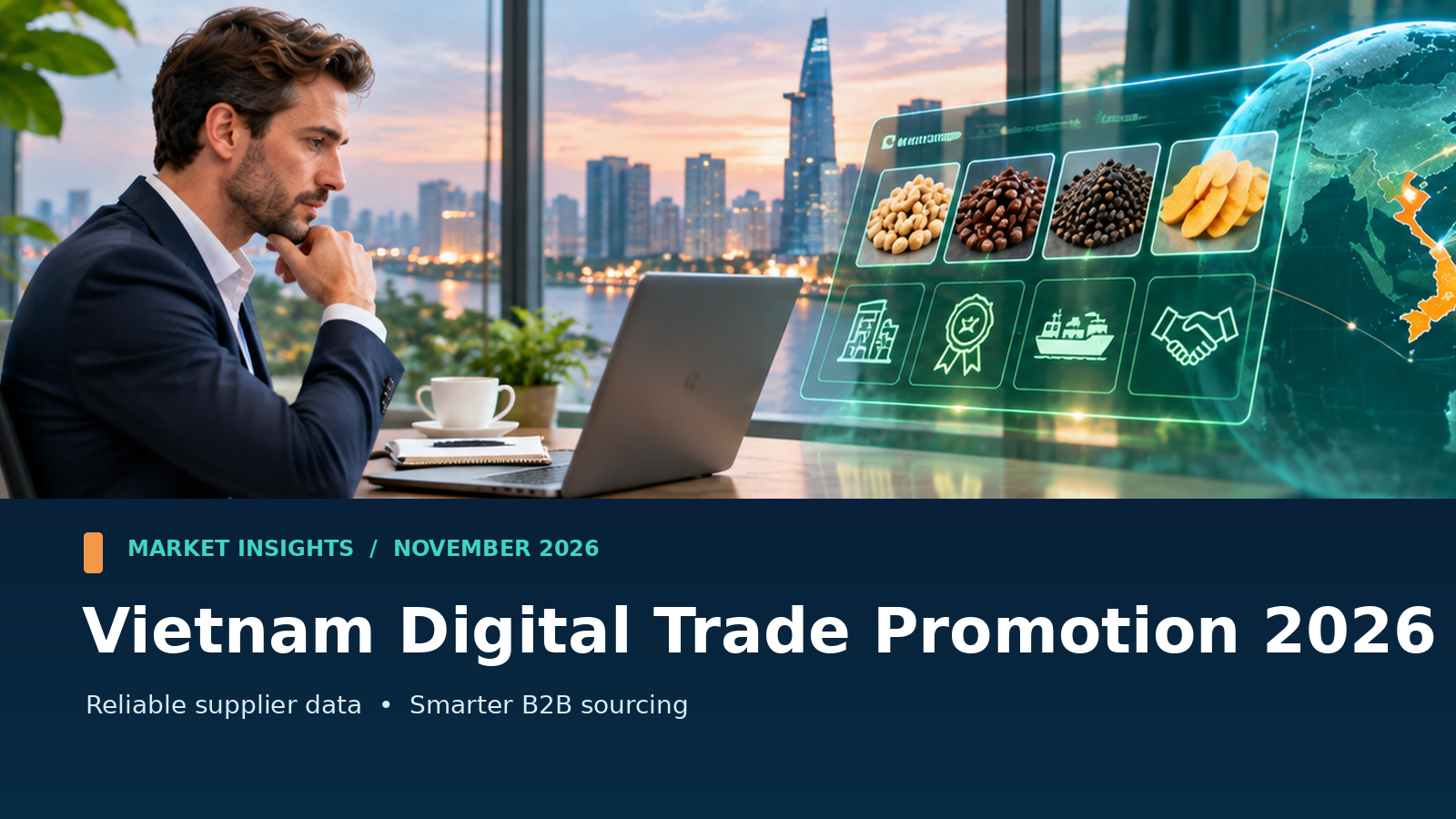
Vietnam Digital Trade Promotion 2026 is entering a more data-driven phase as Vietnamese trade authorities emphasize continuous business connections, reliable company information, and the integration of online platforms with traditional trade promotion. On November 5, Vietnam's Ministry of Industry and Trade highlighted the growing importance of building a connected digital trade promotion ecosystem rather than relying solely on individual exhibitions and business-matching events.
The direction reflects a broader change in international sourcing: buyers need more than product introductions. They require accurate supplier profiles, comparable specifications, supporting documentation, and clear communication channels to evaluate potential business partners.
For Vietnam's food and agricultural sector, these developments are particularly relevant to digital B2B marketplaces that connect international buyers with Vietnamese manufacturers, cooperatives, and trading companies.
This article examines the latest official developments and explains how VEXIM Trade's existing sourcing tools can help buyers and suppliers put these principles into practice.
1. Vietnam Digital Trade Promotion 2026: What Did the Ministry of Industry and Trade Announce?
On November 5, 2026, Vietnam's Ministry of Industry and Trade emphasized the development of a digital trade promotion ecosystem that supports continuous business connections and better use of enterprise data. The update highlighted the importance of accurate company information, reliable technology infrastructure, and cooperation among trade promotion organizations and businesses. It described a development direction rather than a newly enacted supplier-verification law.
The Ministry's report featured comments from Ta Manh Cuong, Director of the Trade and Investment Promotion Support Center under the Vietnam Trade Promotion Agency.
According to the report, digital trade promotion should not end when an exhibition, business-matching conference, or trade mission concludes.
Instead, digital platforms can maintain business information and support further contact between potential partners after an event.
The policy direction is connected to Prime Ministerial Decision No. 1968/QD-TTg, issued on November 22, 2021, approving a national program to advance information technology and digital transformation in trade promotion during 2021–2030.
Key Developments Behind Vietnam's Digital Trade Promotion Strategy
| Date | Official development | Significance for businesses |
|---|---|---|
| November 22, 2021 | Decision 1968/QD-TTg issued | Established the national digital trade promotion program for 2021–2030 |
| November 4, 2026 | Vietnam Export Promotion Forum discussed the Go Global approach | Emphasized competitiveness, branding, and deeper participation in global value chains |
| November 5, 2026 | Ministry of Industry and Trade published an update on the digital trade promotion ecosystem | Highlighted reliable data and continuous business connections |
| November 6, 2026 | Current market analysis | Buyers and suppliers can review how existing digital sourcing tools support these goals |
Sources: Ministry of Industry and Trade, November 4–5, 2026; Government of Vietnam, Decision 1968/QD-TTg.
The distinction between a government development strategy and a new legal obligation is important.
The November 5 report does not establish that all Vietnamese suppliers must join a particular B2B marketplace or obtain a new government-issued digital verification badge.
Businesses should interpret the announcement as guidance on the direction of trade promotion and data management.
Official source: Ministry of Industry and Trade – Building a Continuously Connected Digital Trade Promotion Ecosystem.
2. How Is Digital Trade Promotion Changing International B2B Sourcing?
Digital trade promotion is expanding international sourcing beyond one-time introductions at exhibitions and trade events. Buyers and suppliers can maintain product information, review company records, and continue commercial discussions through online channels after an event has ended. The approach complements physical meetings rather than replacing them, making the quality and accessibility of business information increasingly important.

Traditional trade promotion activities allow buyers to inspect samples, meet company representatives, and discuss purchasing requirements directly.
However, a short meeting rarely provides enough time to complete supplier evaluation or negotiate every commercial detail.
Buyers often require additional information after the initial contact, including technical specifications, certificates, production arrangements, prices, and shipment conditions.
Digital platforms can provide a structured environment for reviewing these details.
Physical Trade Promotion and Digital B2B Sourcing
| Business activity | Traditional trade promotion | Digital B2B sourcing |
|---|---|---|
| Supplier discovery | Exhibitor booths and business meetings | Searchable supplier and product listings |
| Product information | Samples, catalogues and brochures | Structured online product specifications |
| Supplier evaluation | Document requests and follow-up meetings | Accessible company profiles and review records |
| Quotation requests | Email exchanges after meetings | Online RFQ submission |
| Comparison | Manual review of collected information | Side-by-side product comparison where supported |
| Continued communication | Individual follow-up arrangements | Ongoing contact through digital channels |
These methods perform different functions and can be used together.
For instance, a buyer may first identify a Vietnamese food manufacturer at an international exhibition and subsequently request documentation, product samples, and updated commercial terms.
An online sourcing platform can support parts of this process by making supplier information easier to review.
However, using a digital platform does not automatically mean that the underlying company information is complete or independently verified.
3. Why Is Reliable Supplier Data Essential for Digital Trade Promotion?
Reliable supplier data is essential because international buyers use company and product information to assess commercial suitability before entering purchasing agreements. On November 5, the Ministry of Industry and Trade emphasized that enterprise data should be accurate, sufficiently complete, transparent, and regularly maintained. Digital technology improves access to information, but it cannot compensate for inaccurate or outdated supplier records.
The Ministry's report described enterprise data quality through the principle of information that is clean, correct, and complete.
For international sourcing, this principle can be applied to business registration, company capabilities, product specifications, production arrangements, certifications, and shipment information.
A supplier profile containing incomplete or outdated details may lead to unsuitable enquiries or incorrect purchasing assumptions.
What Information Should a Buyer-Ready Supplier Profile Include?
| Information category | Details to provide | Why it matters to buyers |
|---|---|---|
| Business identity | Registered company name and relevant registration documents | Helps identify the contracting business |
| Supplier role | Manufacturer, cooperative or trading company | Clarifies production and sourcing responsibilities |
| Product details | Grade, specifications, processing method | Supports technical comparisons |
| Commercial information | MOQ, reference price, lead time, Incoterms | Supports quotation assessment |
| Production arrangements | Own facility or partner-factory relationship | Helps assess supply capabilities |
| Certifications | Holder, relevant scope, expiry date | Supports document review |
| Shipment information | Relevant export or delivery evidence | Provides historical context where available |
| Updates | Changes in products, capacity or commercial terms | Reduces the risk of outdated information |
Editorial framework based on the Ministry's November 5 data-quality discussion and VEXIM Trade's published platform rules.
Why Must Supplier Listings Be Updated Regularly?
Supplier listings should be updated whenever significant product, capacity, certification, or commercial information changes. A supplier may introduce new packaging, change production partners, adjust minimum order quantities, or renew a certificate. If these changes are not reflected in the published information, buyers may evaluate an offer using details that no longer describe the supplier's actual capabilities.
The Ministry of Industry and Trade specifically highlighted the need for businesses to maintain their data after joining digital trade promotion platforms.
For suppliers, this means that creating a profile should be the beginning of information management, not the final task.
For buyers, the date and relevance of available information remain important considerations before requesting quotations.
4. How Can Buyers Use VEXIM Trade to Find and Compare Vietnamese Suppliers?
International buyers can use VEXIM Trade to search Vietnamese food and agricultural products, compare available specifications, review supplier records, and send requests for quotation. The platform connects buyers with potential suppliers rather than directly selling the listed goods. Its published buyer guide explains how users can evaluate product information and decide which suppliers they want to contact.
VEXIM Trade focuses on a practical sourcing workflow: discovering products, reviewing information, checking available evidence, and requesting commercial details.
Step 1. Search for Products and Available Supplier Offers
Buyers can begin by searching product names, grades, or categories on VEXIM Trade. The marketplace provides listings for Vietnamese food and agricultural products, with information that may include specifications, minimum order quantities, lead times, reference prices, and supplier details. Available listings help buyers identify potential options, but individual product availability and final commercial terms must still be confirmed.
The platform's current food and agricultural categories include cashew kernels, pepper, dried fruits, cinnamon and star anise, coffee, tea, beverages, and other available product groups.
Buyers should focus on the products relevant to their requirements rather than assuming every category contains an equally broad supplier network.
Explore: VEXIM Trade Marketplace.
Step 2. Compare Product Specifications Before Requesting Quotes
VEXIM Trade allows buyers to compare up to three selected products using available information such as specifications, minimum order quantities, export ports, certificates, and reference prices. This comparison can help buyers identify meaningful differences before contacting suppliers. However, the displayed reference prices are indicative and do not replace quotations confirmed for a specific quantity, shipment schedule, and delivery arrangement.
Product comparison should consider technical and commercial details together.
For example, suppliers offering a similar food ingredient may have different quality grades, packaging formats, documentation, or delivery conditions.
A lower reference price does not automatically mean a lower final landed cost.
Buyer guide: How Sourcing Works on VEXIM Trade.
Step 3. Review Supplier Verification Records and Certificates
Buyers should examine the individual verification checks displayed on a VEXIM Trade supplier profile before relying on a company's claims. The platform reviews business documents, factory evidence or partner-factory contracts, and relevant shipment history through separate approval processes. Buyers can also review displayed certificate details, including whether a certificate belongs to the supplier or a partner entity.
These checks provide additional information about evidence reviewed by the platform.
They do not guarantee the quality of every product, establish that a partner factory is owned by the supplier, or confirm that all future orders will be completed successfully.
A supplier may have one approved check while others remain incomplete or unapproved.
Verification guide: How VEXIM Trade Verifies Suppliers.
Step 4. Submit an RFQ and Review Supplier Responses
Buyers can submit a Request for Quotation to a supplier they select or send an open sourcing request when they have not identified a suitable company. The enquiry should include product specifications, quantities, destination, and relevant requirements. VEXIM Trade facilitates communication, while final pricing, product approval, contracts, and payments remain matters agreed directly between the buyer and supplier.
According to the published buyer guide, a request directed to a chosen supplier goes to that supplier first.
If it cannot meet the requirements, the platform asks the buyer's permission before suggesting alternatives.
The platform states that it provides an initial update within one business day. This is not a guarantee that a complete quotation will be available within that period.
Buyer email addresses and phone numbers are disclosed to suppliers after the buyer approves an introduction.
5. What Do VEXIM Trade's Supplier Verification Checks Actually Confirm?
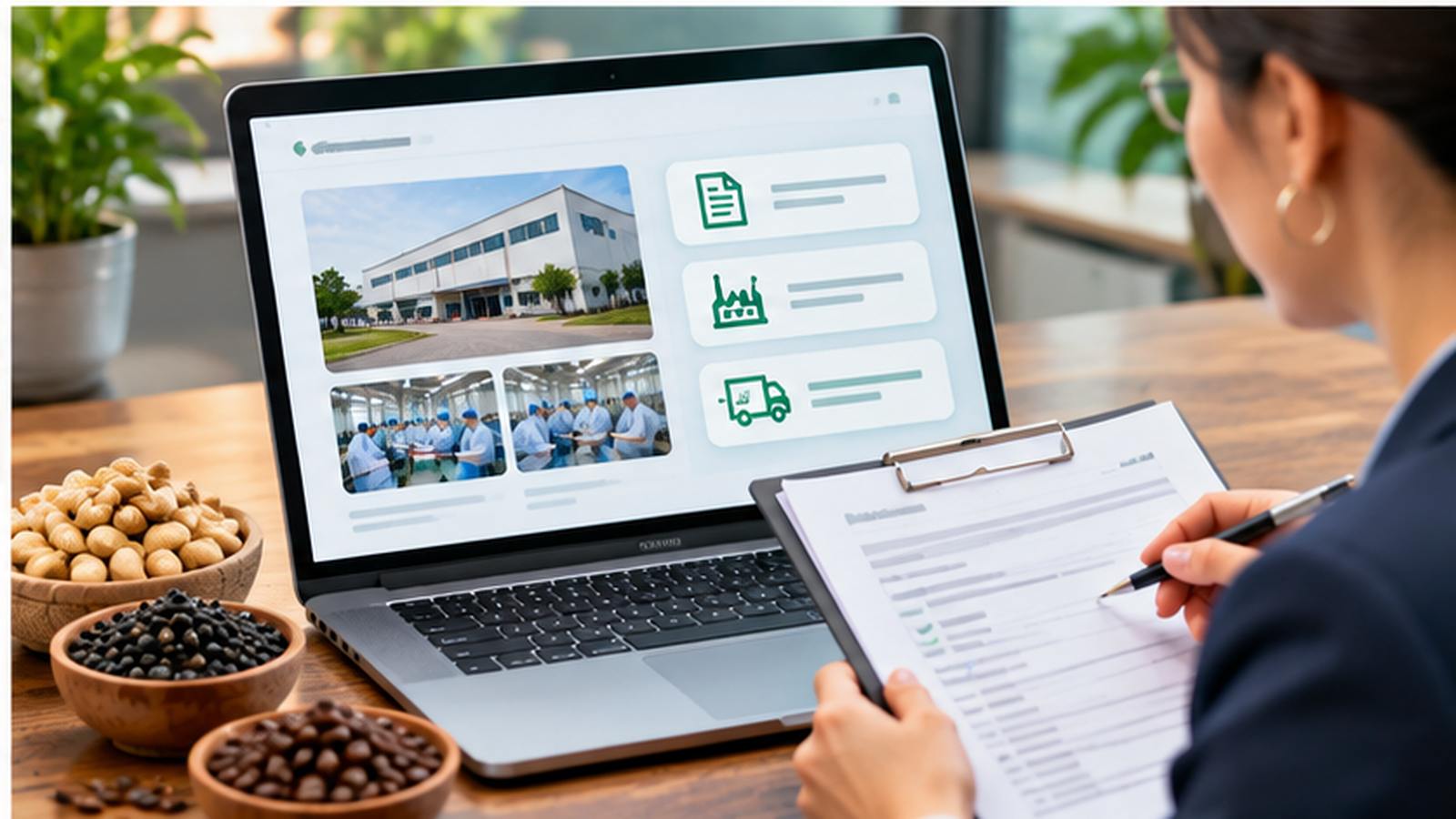
VEXIM Trade's verification system records three independent types of review: business documentation, factory or partner-factory evidence, and shipment history. Each approved check indicates that the platform's authorized staff reviewed evidence within that check's defined scope. Approval of one review does not automatically approve another, and a verification badge does not constitute a general guarantee of commercial performance.
Understanding the Three Supplier Checks
| Check | Evidence reviewed | Important limitation |
|---|---|---|
| Check 1 – Document Review | Business registration and applicable company information | The supplied tax number is not independently checked with the tax authority |
| Check 2 – Factory or Partner Contract Review | Manufacturing evidence or a trading company's partner-factory contract | Reviewing a contract does not prove factory ownership or an on-site inspection |
| Check 3 – Delivery History Review | Suitable export or shipment evidence | Shipment evidence does not automatically prove buyer receipt or future delivery reliability |
Source: VEXIM Trade – Supplier Verification.
The platform also distinguishes supplier certificates from business registration documents.
A displayed certificate may relate to the supplier or another entity and does not automatically apply to every product listed by that business.
This distinction is especially important in international food sourcing, where buyers may require product-specific or facility-specific documentation.
Does a Verification Badge Guarantee Product Quality?
No. A VEXIM Trade verification badge identifies a defined review approved by the platform's staff; it does not guarantee product quality, future delivery, financial reliability, or the result of an individual transaction. Buyers should continue to check samples, technical specifications, inspection arrangements, contractual terms, and relevant regulatory requirements before placing an order or making a payment.
The difference between checking supplier information and guaranteeing a transaction must remain clear.
This is consistent with the broader principle that digital sourcing systems should provide transparent information without overstating what their review processes establish.
6. How Should Vietnamese Suppliers Prepare for Digital B2B Sourcing in 2026?
Vietnamese suppliers should prepare accurate company documents, structured product information, relevant certifications, and realistic commercial terms before publishing profiles on B2B platforms. The Ministry's November 5 update emphasized transparent, complete, and maintained enterprise data. Manufacturers, cooperatives, and trading companies can use these principles to make their capabilities easier for international buyers to understand and evaluate.
Five Practical Steps for Suppliers
| Step | Action | Expected outcome |
|---|---|---|
| 1 | Prepare accurate business documents | Clear company identity |
| 2 | Describe actual manufacturing or sourcing arrangements | Transparent supplier role |
| 3 | Standardize product specifications and commercial information | Easier buyer comparison |
| 4 | Review certificate scope and supporting evidence | More accurate documentation |
| 5 | Maintain current product and business information | More reliable published profile |
Step 1. Prepare Company Identity and Business Documents
Suppliers should prepare their registered company name, business registration details, contact information, and relevant supporting documents before applying to a digital sourcing platform. Accurate business identity information helps distinguish the legal seller from manufacturing partners or other intermediaries. Documents should reflect the current business structure and should not be presented as independently verified when that review has not occurred.
For VEXIM Trade, the supplier onboarding process begins with account creation and the submission of company information.
The platform reviews submitted documents before separately authorizing access to relevant supplier tools and publication.
Step 2. Describe Manufacturing and Sourcing Arrangements Accurately
Manufacturers and trading companies should describe their roles accurately so buyers can understand how products are produced and supplied. A factory owner may submit evidence relating to its manufacturing facility, while a trading company may provide a relevant partner-factory contract. These arrangements should not be described as equivalent, and a trading company should not claim to own a facility it does not own.
VEXIM Trade's published verification rules distinguish between direct factory evidence and partner-factory documentation.
This distinction supports more accurate supplier profiles and reduces the risk of misleading production claims.
Step 3. Standardize Product Specifications and Commercial Information
Suppliers should provide consistent product descriptions that clearly identify grades, relevant specifications, packaging, minimum order quantities, lead times, and usual export terms. Well-structured information helps buyers compare offers without repeatedly requesting basic clarification. Indicative prices should also be described accurately because final quotations may change according to order volume, delivery conditions, and other agreed requirements.
A supplier's profile should identify the specific products it can offer and the conditions under which the information is valid.
Overly broad claims about capacity, available grades, or shipping readiness can create unnecessary commercial disputes.
Step 4. Review Certificates and Supporting Evidence
Suppliers should verify that their uploaded certificates belong to the correct entity, remain valid, and relate to the activities or products they are intended to support. When a partner factory holds a relevant certificate, the supplier should identify that relationship accurately. A quality certificate does not replace business registration, and its presence should not be presented as universal product compliance.
Relevant requirements differ according to the product and destination market.
Suppliers should distinguish between food safety management certificates, product test reports, origin documents, and other commercial records because these documents serve different purposes.
Step 5. Keep Supplier Profiles Updated After Publication
Supplier profiles should remain current after publication, particularly when product ranges, manufacturing relationships, certifications, lead times, or other important details change. The Ministry of Industry and Trade's November 5 discussion emphasized that enterprise data should be maintained rather than submitted once and left unchanged. Regular updates help buyers evaluate offers using information that more accurately reflects current operations.
For Vietnamese suppliers using VEXIM Trade, published information should remain consistent with their actual product and business capabilities.
The platform's rules require suppliers to provide accurate information and update it when changes occur.
Supplier onboarding: Information for Vietnamese Suppliers.
7. Does Vietnam's Digital Trade Promotion Strategy Create New Requirements for B2B Platforms?
The November 5, 2026 Ministry of Industry and Trade report highlights policy priorities for digital trade promotion, including data quality, technology infrastructure, and continuous business connections. It does not, by itself, introduce a new mandatory verification certificate for every supplier or approve a specific private B2B platform. Businesses should distinguish national policy objectives from the operating rules of individual marketplaces.
Decision 1968/QD-TTg is an existing government decision issued in November 2021, covering digital transformation in trade promotion through 2030.
The November 2026 discussion concerns the development and effectiveness of that broader approach.
VEXIM Trade is an independent B2B platform with its own published supplier-review procedures and operating rules.
Its functions may support practical sourcing activities that align with the broader digitalization trend, but this does not mean the platform has a formal government partnership or government-issued approval for its verification badges.
The platform's operating rules, updated November 1, 2026, also clarify that VEXIM Trade does not currently accept orders, process payments, or hold money on behalf of either party.
Related sources: Government Decision 1968/QD-TTg and VEXIM Trade – Platform Operating Rules.
8. Frequently Asked Questions About Vietnam Digital Trade Promotion 2026
Vietnam Digital Trade Promotion 2026 raises questions about digital supplier discovery, government policy, verification records, and online B2B transactions. International buyers need to know whether platform information can be trusted, while Vietnamese suppliers need to understand what documents should be prepared. The following answers distinguish official policy developments from the functions and limitations of VEXIM Trade.
1. What Is Vietnam Digital Trade Promotion 2026?
Vietnam Digital Trade Promotion 2026 refers to the ongoing development of digital tools, enterprise data systems, and connected trade promotion activities under Vietnam's broader 2021–2030 strategy. The Ministry of Industry and Trade's November 5 update emphasized continuous business relationships and reliable information. It did not announce that physical exhibitions would be discontinued or replaced by a single online platform.
2. Why Does Supplier Data Quality Matter for International Buyers?
Supplier data quality matters because buyers depend on accurate company, product, and commercial information to evaluate potential business partners. Incomplete specifications, outdated certificates, or unclear manufacturing arrangements can lead to unsuitable enquiries and incorrect purchasing assumptions. Digital platforms can make information easier to access, but buyers should still verify important facts before concluding contracts.
3. Can Buyers Compare Vietnamese Supplier Offers on VEXIM Trade?
Yes. VEXIM Trade's published buyer guide describes a feature for comparing up to three selected product offers. Buyers can review available specifications, minimum order quantities, reference prices, export ports, and certificate information. The comparison supports initial research, but final prices, product suitability, and commercial conditions must be confirmed with the relevant supplier.
4. Are All Suppliers on VEXIM Trade Fully Verified?
No. VEXIM Trade reviews different categories of supplier evidence independently, and some profiles may have approved checks while others remain incomplete. An approved document review does not automatically establish factory ownership, shipment performance, or product compliance. Buyers should examine the specific badges and available supporting information before making purchasing decisions.
5. Is It Free to Submit an RFQ on VEXIM Trade?
Yes. According to VEXIM Trade's current published buyer guide and operating rules, buyers can submit quotation requests without a platform sourcing fee. The platform does not currently accept payments for goods or hold funds. Buyers and suppliers remain responsible for agreeing on the final product price, delivery terms, and payment arrangements directly.
6. Does Registering a Supplier Account Automatically Create a Published Profile?
No. Creating an account or uploading company documents does not automatically publish a supplier profile or approve verification checks. VEXIM Trade reviews supplier information and separately authorizes publication and access to relevant platform tools. Suppliers should prepare accurate documentation and maintain current product information as part of the onboarding and ongoing listing process.
7. Can Digital Trade Platforms Replace Physical Trade Fairs Entirely?
Not necessarily. The Ministry of Industry and Trade's November 5 report described digital platforms and physical trade promotion as complementary methods. Exhibitions allow direct meetings and product examination, while online systems can maintain supplier information and support continued communication. Buyers may benefit from combining both approaches according to their sourcing requirements.
9. Conclusion: Reliable Supplier Data Is Central to the Future of B2B Sourcing
Vietnam Digital Trade Promotion 2026 highlights a shift toward more continuous, information-driven business connections. The November 5 policy discussion emphasized reliable enterprise data, digital infrastructure, and the combination of traditional events with online platforms. For international buyers and Vietnamese suppliers, the practical value lies in accurate information, transparent evaluation, and communication that can continue beyond individual trade promotion activities.
Digital platforms are most useful when they make relevant product and supplier information accessible without overstating the reliability of individual businesses.
For buyers, this means comparing specifications, reviewing verification evidence, and confirming commercial conditions.
For suppliers, it means maintaining accurate company profiles, documenting production arrangements, and providing information that helps partners assess genuine capabilities.
VEXIM Trade contributes to this sourcing process through its existing marketplace, comparison features, independent supplier checks, and RFQ functions.
Explore Vietnamese B2B Sourcing Opportunities on VEXIM Trade
VEXIM Trade provides international buyers with a digital starting point for exploring Vietnamese food and agricultural suppliers. The platform offers searchable product listings, comparison tools, supplier information, and quotation requests. Buyers can review available records and select potential partners, while final purchase decisions, commercial agreements, and payments remain the responsibility of the participating businesses.
For international buyers: Explore available Vietnamese products, compare listed specifications, review supplier verification information, and submit purchasing requirements.
For Vietnamese suppliers: Prepare accurate company documents, describe your actual products and production arrangements, and apply for review through the supplier portal.
Explore Vietnamese Products and Suppliers
Join VEXIM Trade as a Supplier
VEXIM Trade — Discover Products. Review Supplier Information. Connect Directly.
Official References
- Ministry of Industry and Trade – Building a Continuously Connected Digital Trade Promotion Ecosystem, November 5, 2026
- Ministry of Industry and Trade – Go Global Is More Than Exporting, November 4, 2026
- Government of Vietnam – Decision 1968/QD-TTg, November 22, 2021
- VEXIM Trade – Official B2B Marketplace
- VEXIM Trade – How Sourcing Works for Buyers
- VEXIM Trade – Supplier Verification Process
- VEXIM Trade – Information for Vietnamese Suppliers
- VEXIM Trade – Platform Operating Rules, Updated November 1, 2026
Editorial cutoff: November 6, 2026. Government policy directions and platform operating procedures are described according to the official sources reviewed at publication. Supplier verification does not replace independent buyer due diligence or applicable regulatory requirements.
Sourcing request
Have a product in mind? Send us your brief.
We match it to a Vietnamese producer that fits, and tell you plainly when none does. A written reply by the start of your next business day.
Request a quote